Mission Control, for a fleet of one
The app shows five numbers. Behind it there's a dashboard that has quietly become the biggest bit of software in the project. Because once a computer is sealed in epoxy and dropped in the sea, the only way to run it is to get really, really good at listening.
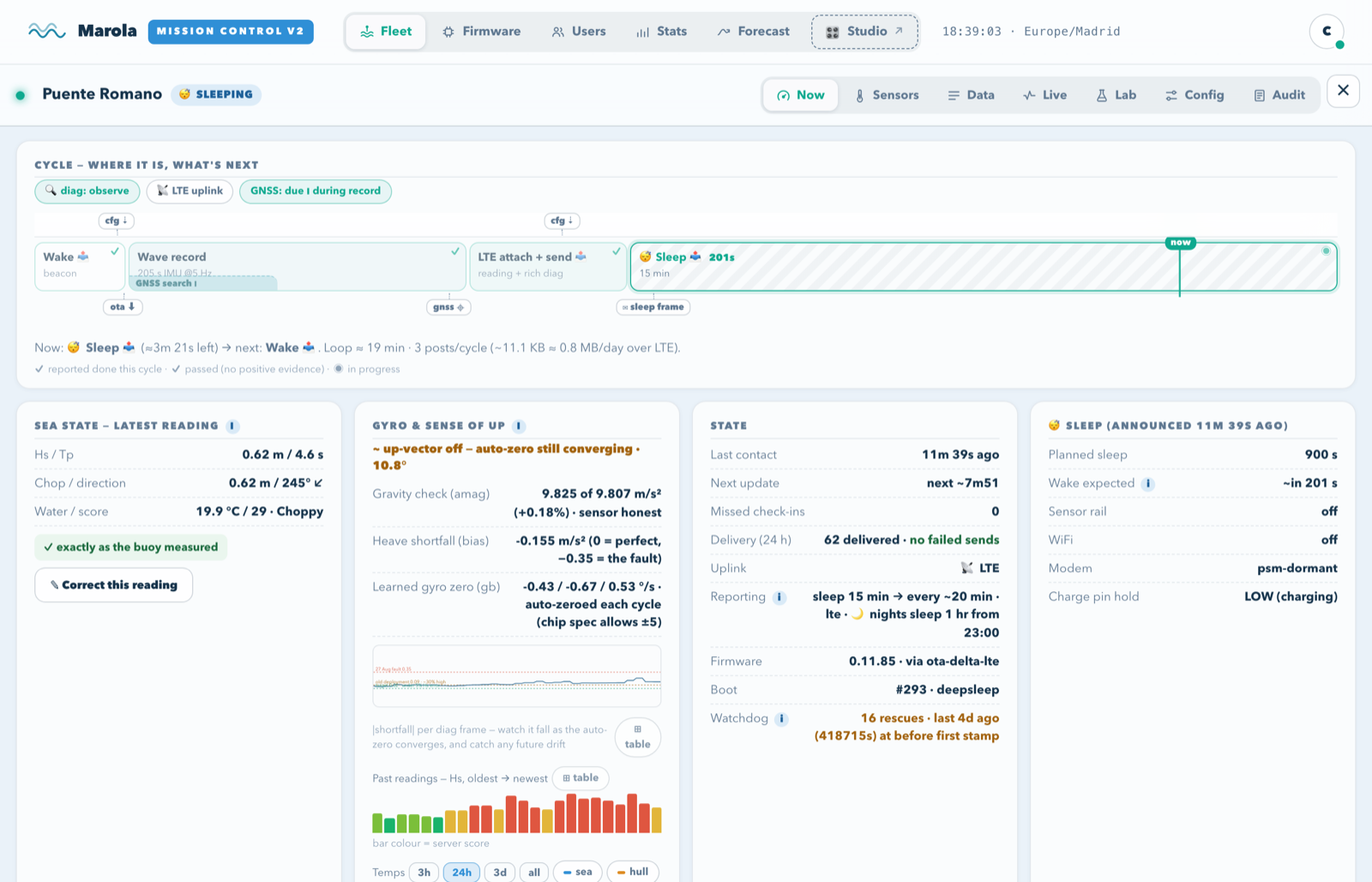
Everything is a conversation
She phones home every 15 minutes. The reply to that call is our only chance to say anything back, so every setting rides in it: how often to report, how long to record, when to sleep deeper, whether to run the GPS. The dashboard shows each setting twice, what we asked for and what she's actually doing, so a lost instruction shows up as a visible disagreement instead of silent confusion. That honesty caught a proper bug once: a radio glitch had made her deaf to every instruction for days while looking perfectly healthy. The "asked vs doing" columns just quietly stopped matching.
Updating firmware on something you can't touch
A full firmware image is 1.34 MB. Over a cellular plan measured in megabytes, that's a small fortune. So updates travel as patches: just the difference between the version she's running and the new one, squeezed down to about 20 KB. That's 1.5% of the full size.
And because a bad update on a sealed buoy is forever, every update is on probation: the new firmware gets three boot cycles to prove it can complete one real check-in, or she rolls herself back to the old version and tells us what happened. An update can brick a gadget on your desk. It must not brick an instrument on a mooring.
The paper trail
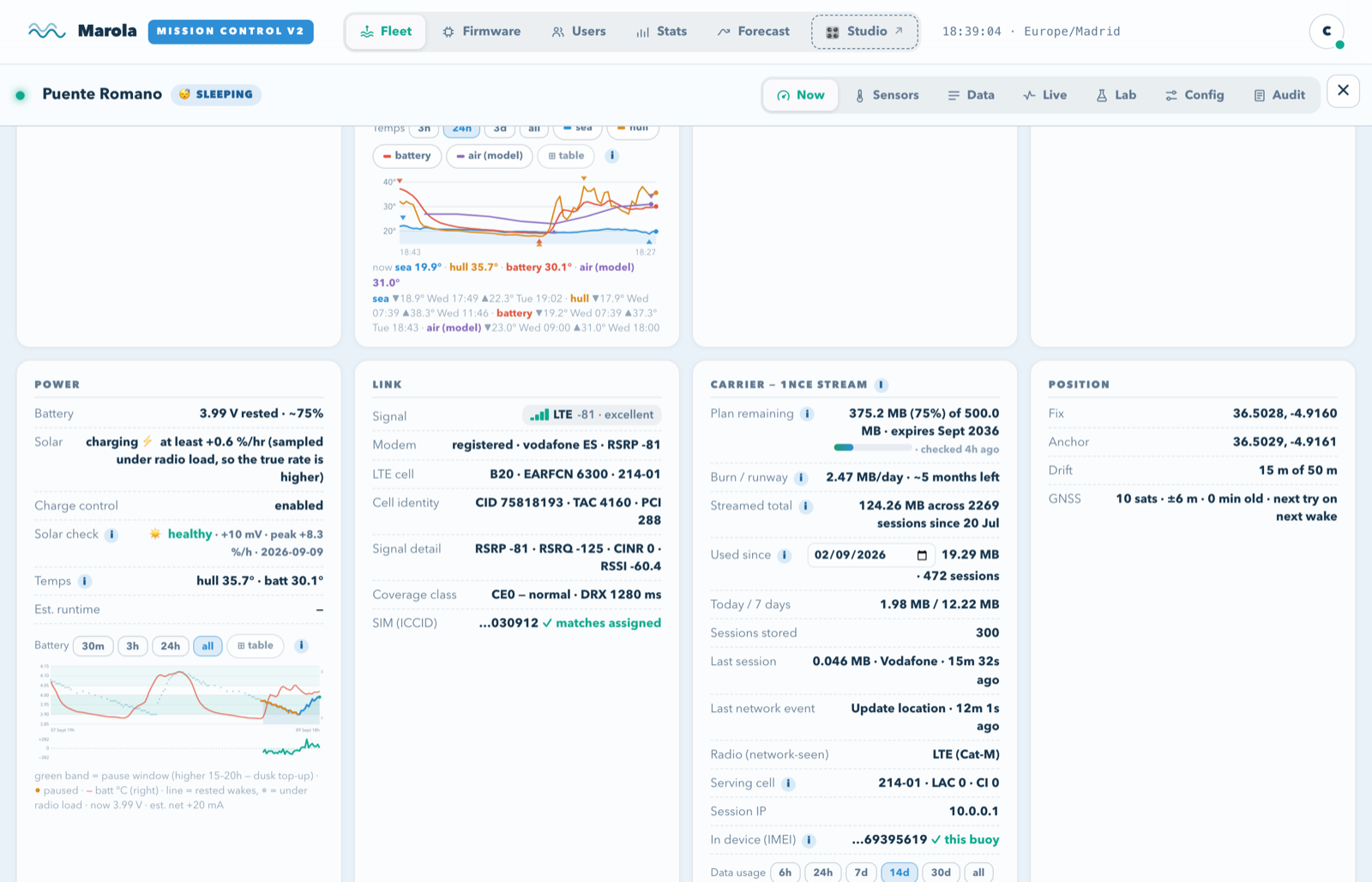
Two rules keep us honest. Every change anyone makes to the buoy is logged: who, what, when, and whether she acknowledged it. And any reading we ever correct by hand keeps its original value stored right next to it, marked as corrected, forever. The app gets clean data. The record keeps the truth about how it got clean.
The fun one
There's also a live mode. Flip it on and she streams her actual tilt and heading five times a second, and a little 3D buoy on the screen mirrors the real one, wobble for wobble, from a desk kilometres away. We built it as a debugging tool. We keep it because it's impossible to close.